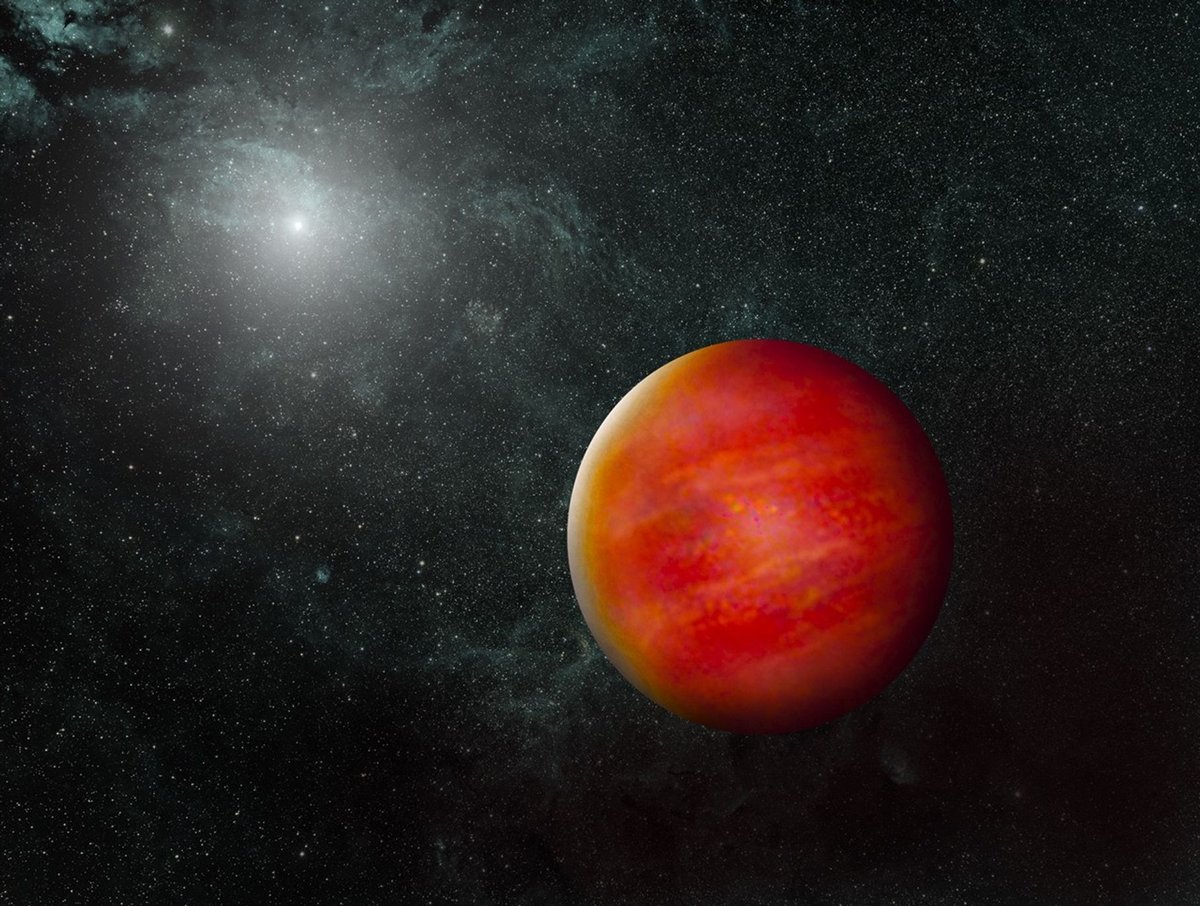
Anew paperfrom NASA’sBackyard Worlds: Planet 9project announces that volunteers have essentially doubled the number of known brown dwarfs, with over 3,000 new discoveries made over the past 10 years since the project began.
Brown dwarfs are balls of gas the size of Jupiter, less massive than stars.
There’s one for every three or four stars near the Sun.
Although brown dwarfs are common, they can be hard to spot because they shine so faintly compared to stars.
Having twice as many brown dwarfs to study allows astronomers a deeper understanding of these elusive objects.
Already, this vital new list of brown dwarfs has revealed a new variety of objects – theextreme T subdwarfsand manyother rarities, such asultra-cool objectsand a brown dwarf thatappears to have aurorae.
It has also helped us inventory the distribution of mass in our galaxy andmap our cosmic neighborhood.
The discoveries are published in a paper published in the Astronomical Journal, led by astronomer Adam Schneider from the U.S. Naval Observatory.
They represent work done over the course of ten years aided bya team of roughly 200,000 volunteers.
Of the paper’s 75 authors, 61 are volunteers.
Two of the other authors began their work with the team as volunteers and then embarked on careers in astronomy.
“I truly appreciate the recognition for all of us who collaborated, in some way, on this effort,” said Walter Ruben Robledo, an amateur astronomer and Backyard Worlds: Planet 9 volunteer from Cordoba, Argentina.
“When I received the news about the co-authorship, I thought: Yes, dreams do come true,” said another volunteer, Mayahuel Torres Guerrero, from Mexico City.
The volunteers discovered these brown dwarfs in images taken by NASA’s retired Wide-field Infrared Survey Explorer and Near-Earth-Object WISE Reactivation mission.
They examined the data using the Zooniverse citizen science platform, searching for moving objects by blinking images taken over a 16-year time period.
Some volunteers even contributed by building their own search tools and data analysis software.
Want to help make the next brown dwarf discovery?
The Backyard Worlds: Planet 9 project is still sifting through more than 2 billion sources seen by WISE and NEOWISE-R.
Join the search atbackyardwords.org.
Search the realm beyond Neptune for new planets, nearby stars and more. For anyone with a smartphone or laptop.
Citizen Science
Astrophysics
Astrophysics Division
In this new picture from NASA’s Hubble Space Telescope, a spiral galaxy glittering with star…